THE VISUAL LANGUAGE
Body. Colour.
Construction.
Abstraction and a surreal imagination meet in Michael Plötz’s work. The images keep their meanings open, inviting the discovery of relationships between forms.
IN HIS OWN WORDS
Images before the eyes.
Images in the mind.
„Images reaching the listener’s mind through sound.“
Michael Plötz · translated from the German
In his own online studio, Michael Plötz connected the world observed through photography with inner images. Painting, drawing, computers and sound offered different ways to give them form.
Listen to his music ↗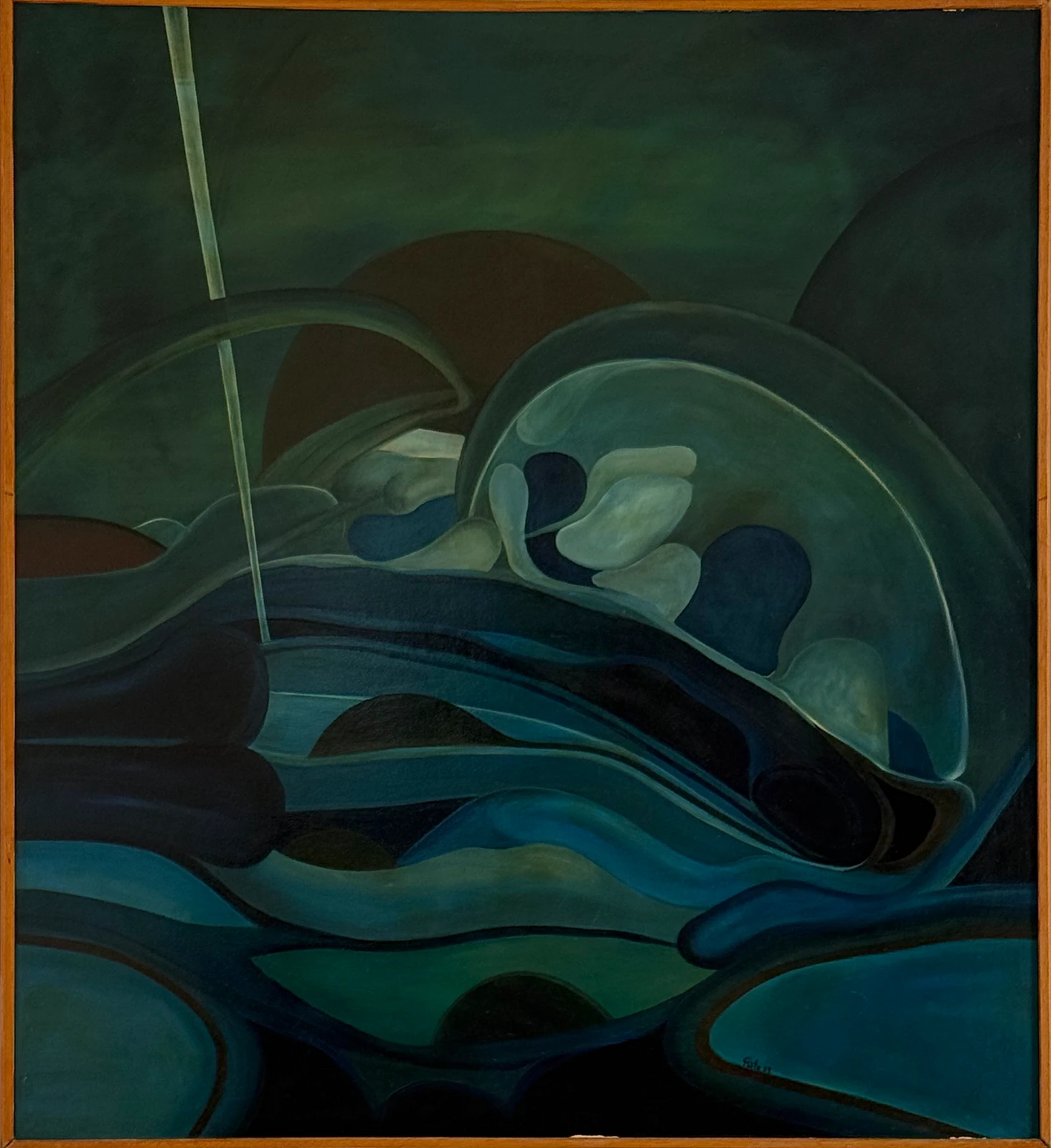
01
Organic form
Curves, loops and folds suggest bodies, plants or growth. They remain changeable: a form can be something living and an abstract structure at the same time. Dark openings and gradual tonal transitions give it volume.
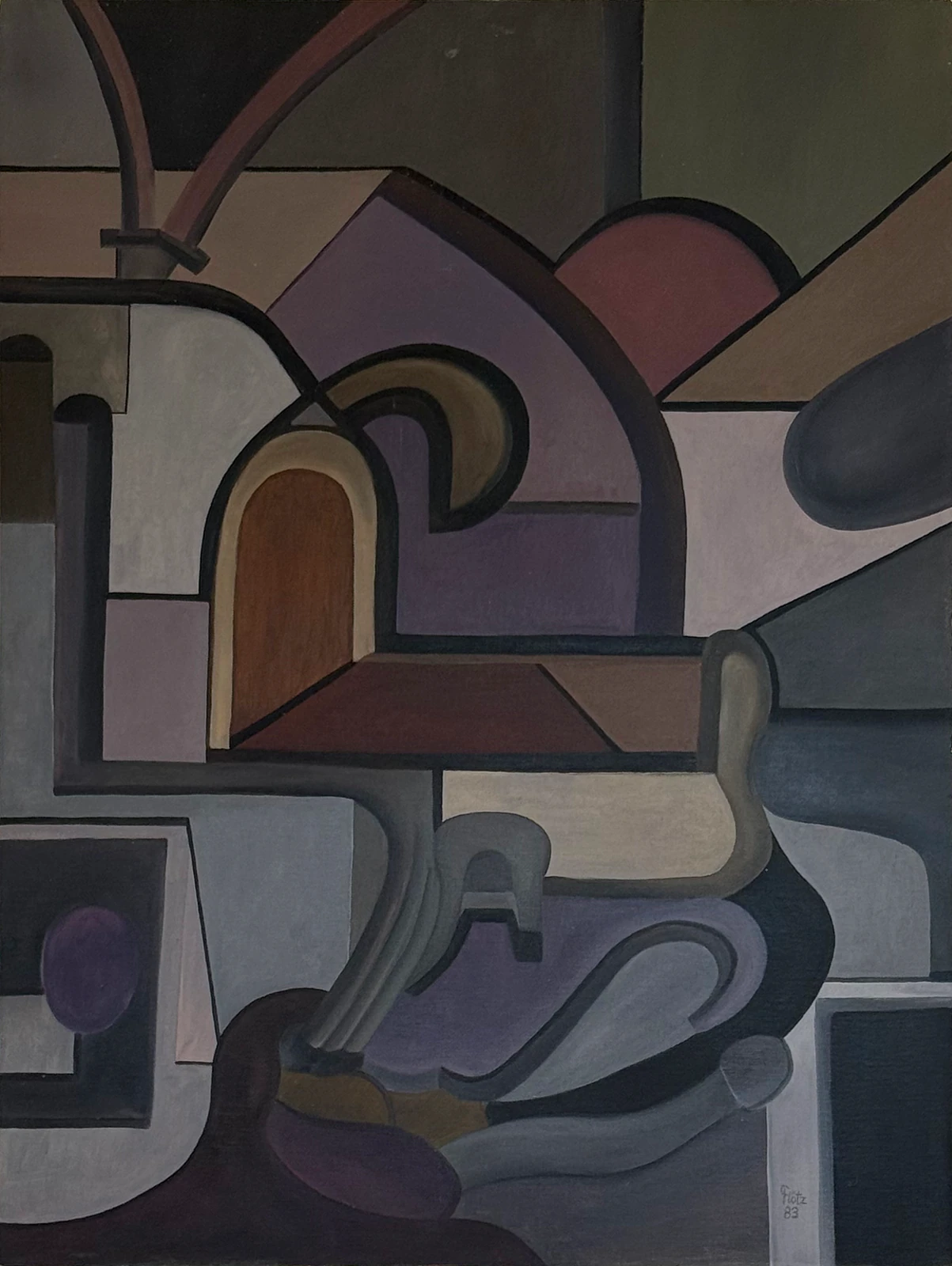
02
Constructed space
Planes, angles and passages construct spaces that the eye can follow, yet which resist a stable perspective. Geometric order becomes the starting point for spatial uncertainty.
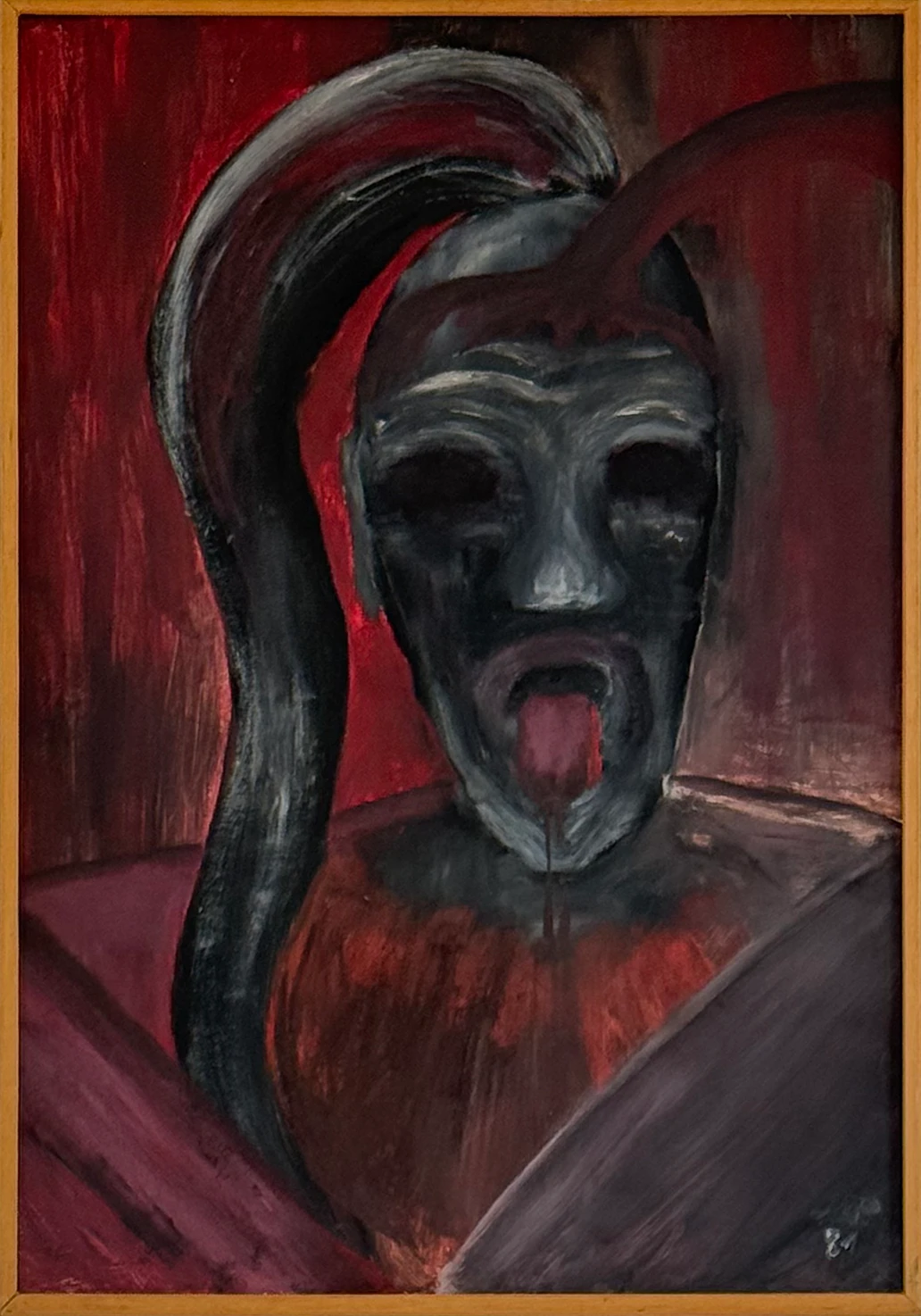
03
Figure and expression
Faces and body-like forms emerge from abstraction. Some remain suggestions; others come forward through forceful paint and strong contrasts. Recognition and dissolution are never far apart.
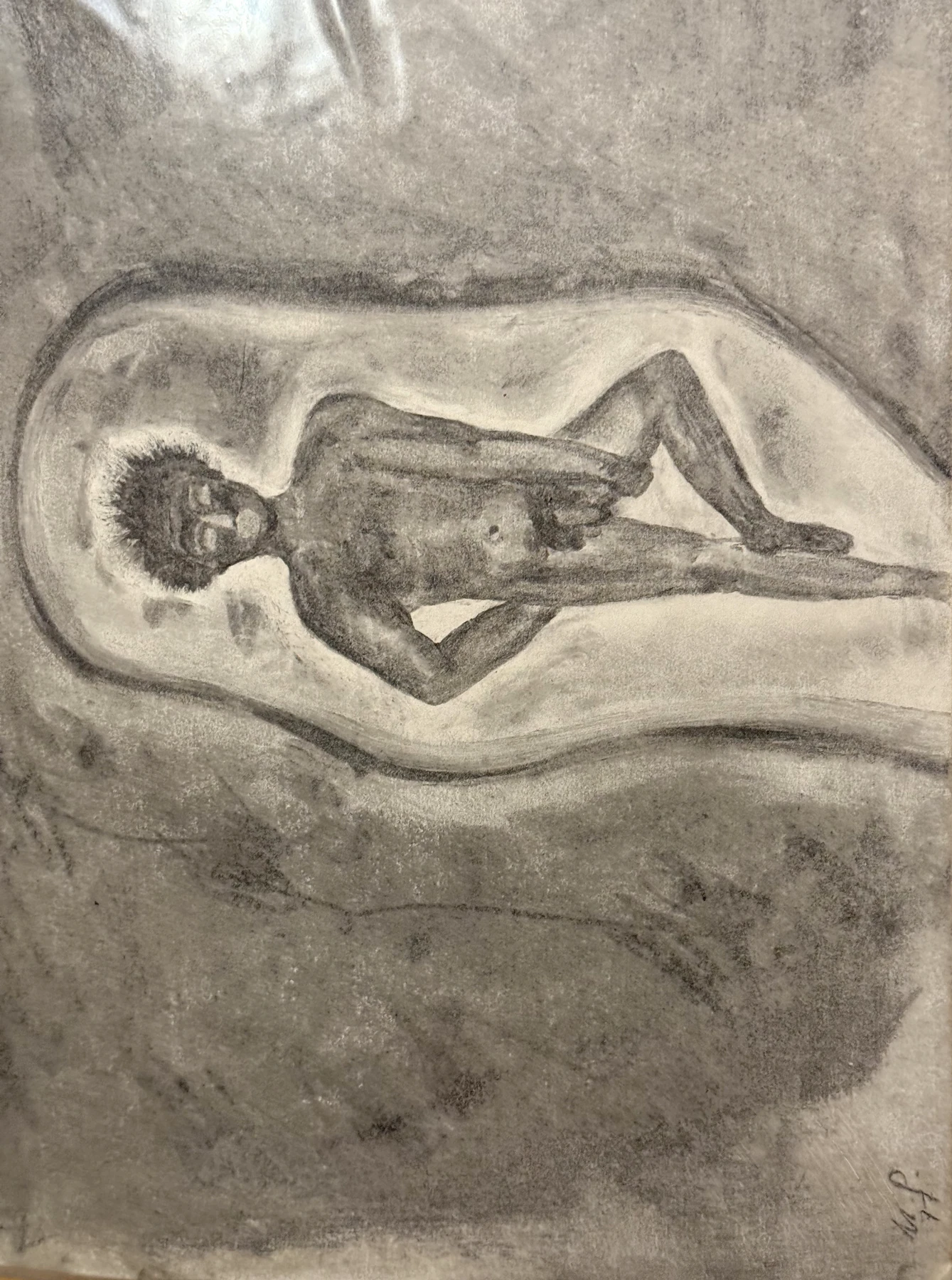
04
The line on paper
On paper, the movement of a line becomes immediately visible. Densities, shading and open areas bring figures and spaces into being without resolving them completely. The sketches form a field of their own within the work.
05
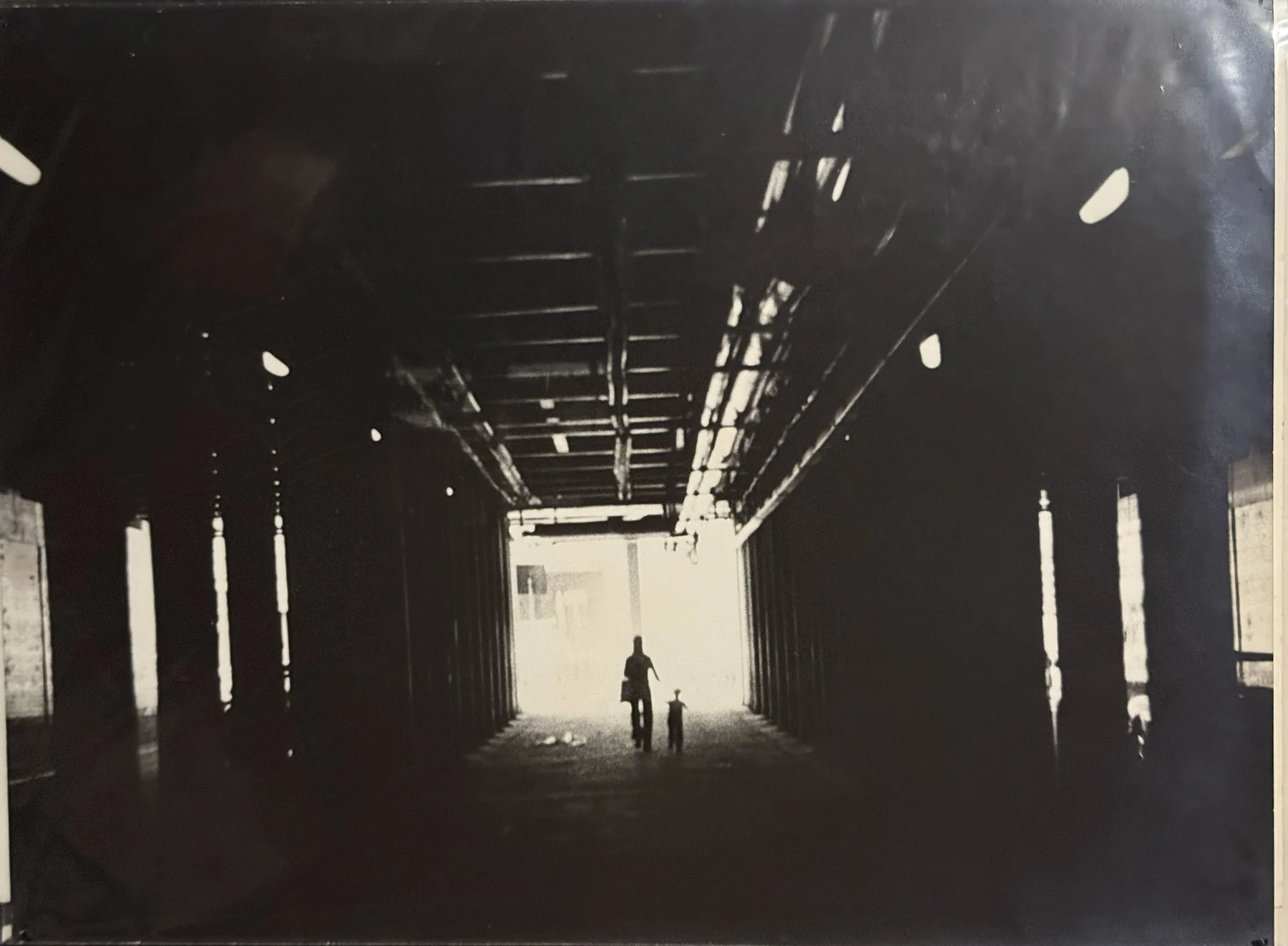
The photographic eye
In photography, light, framing and spatial layers carry particular weight. Everyday scenes become precise visual structures. Montages and experimental images extend observation into new relationships.
COLOUR AND CONTOUR
Depth begins
at the edges.
Deep blues and greens open up pictorial spaces. Red and ochre give them density; pale contours lend the forms structure. Colour does more than describe objects: it creates relationships, separates and connects.
These observations describe visible qualities of the work. They propose neither a single interpretation nor a fixed art-historical classification.